Burnard Bulletin - September
Find out about the latest updates from Burnard International
Post by: Burnard Intl.
|
|
|
|
Port Strikes in GermanyPort workers in Germany’s main ports are once again looking to indefinite strikes after negotiations between the Central Port Association and Ver.di union broke down. According to the union, indefinite strike action can only proceed if at least 75% of members support both the rejection of the offer, and the initiation of prolonged industrial action. The union is seeking 8.2% wage increase over a 12-month period for up to 11,000 port workers. The association’s counteroffer consists of 3.4% increase in hourly wages, applied retroactively, together with EUR200 in holiday pay and EUR416 allowance for employees working in container handling. Voting closes 1 Oct. Should the vote reach 75% support, expect further action and the accompanying congestion and delays across the German network in the coming months. This will inevitably place pressure on neighbouring ports in France, Belgium and the Netherlands as they soak up displaced cargo. Shipping Issues in Asia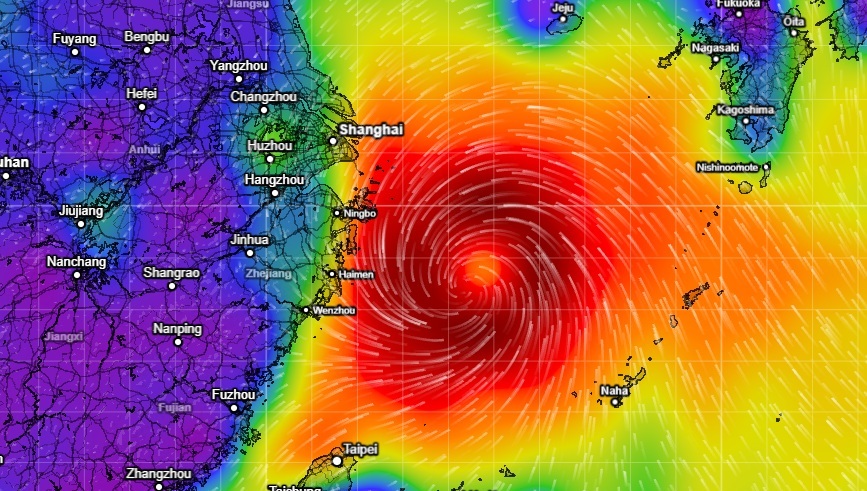 We continue to see major delays coming out of Asia. Shanghai and Fuzhou are currently experiencing berthing delays of approximately 4–7 days, down from 8-9 days earlier in the month. While Ningbo is facing delays of around 3 days, down from 5. Some carriers are planning to omit Shanghai or Ningbo altogether, while other carriers are choosing to wait out the required time and omit less busy stops in favour of keeping schedule integrity. The issue with omitting a port, means the next vessel needs to load double the volume. This places additional pressure on available space and leading once again to fully booked vessels. If you feel you’re seeing more typhoon warnings this year compared to normal, you’d be right. Last year’s typhoon season saw a drop of 35% below the national average, where 2026 is shaping up to see 25% above the national average of typhoons form in the South and East China Seas. Adding further pressure, Chinese Golden Week holiday is just around the corner, putting added strain on suppliers and vessel space. Ruakākā Solar Farm ProjectOur Christchurch branch has been busy importing the components for the North Island Ruakākā Solar Farm, ultimately owned and operated by Meridian Energy. The project involves the import of over 750 x 40-foot containers, carrying approximately 250,000 solar panels and their associated racking systems. Once completed, the solar farm will cover an area equivalent to 170 rugby fields and generate up to 230GWh of renewable energy each year. That’s a lot of containers, an enormous amount of coordination – and a lot of solar panels! We’re proud to be playing our part in helping deliver another major renewable energy project to life in New Zealand. Planning a project? Our specialist team is here to help. Contact us at projects@burnard.co.nz to discuss your requirements and discover how we can support your next business project. 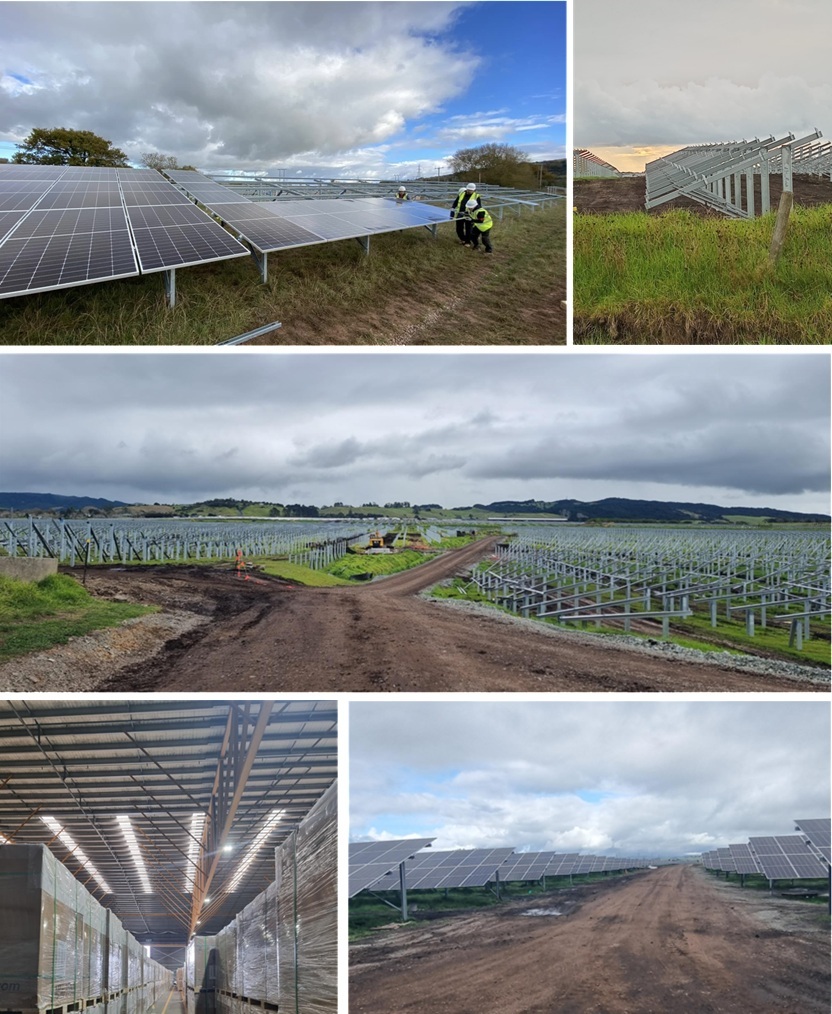 Reminder for Chinese Golden Week HolidayWith China’s Golden Week fast approaching, the combination of increased demand and existing congestion at key ports put further pressure on shipping capacity. The pre-holiday rush has pushed many vessels to full capacity, making it difficult in the past two weeks to secure vessel space for September cargo on our preferred carriers. Golden Week shutdown starts on Thursday, and runs through 1–7 October. Many shipping lines are omitting ports during this week when cargo availability is limited. As seen in previous years, when Golden Week finishes, we expect there to be congestion as a backlog of orders are fulfilled and shipped. We recommend speaking with your suppliers as soon as possible and arranging bookings now for any cargo expected to be ready after the 7th October. The earlier space is secured, the better the chance of minimising risk to cargo being rolled or delayed. Tauranga Port Receives Conditional Approval for Berth ExpansionPort of Tauranga has received approval of it’s application for the Stella Passage development. The development involves extending the Sulphur Point container berth by 385 meters, and the Mt Maunganui wharves by 315 meters using existing cargo storage land. An expert panel reviewed the development and issued a draft decision proposing to grant all approvals sought by the Port of Tauranga, subject to conditions. Port of Tauranga had 2 days to comment on the proposed conditions, which they put forth solutions to win the panel over and gain approval under the Fast-track Approvals Act 2024. The port has spent approximately 7 years navigating the standard Resource Management Act processes and Environment Court hearings before the latest approval. Container Rates from Asia Continue to Rise Without Signs of SlowingAs we reported in July, not much has changed as shipping lines continue to adopt an aggressive approach to freight rate increases coming out of Asia.With rates hovering around triple what they were this same time last year. The proposed increases for 1 October currently range between USD200 and USD600 per TEU, although likely to end up at the lower end. Shipping lines continue to offer reduced services from Asia, which, coupled with stronger than expected demand and an unexpectedly disruptive typhoon season, places pressure on empty equipment availability, port operational flow and vessel space. This combination, along with other external factors such as the Iran war, causes space to be at a premium and rates at an all-time high. Some of our main carriers are full multiple weeks in advance from main Chinese ports, leaving limited options except to look toward costlier alternatives. Further compounding the situation, tranship ports are continuing to see regular one to three week delays. We strongly encourage customers to:
On a more positive note, rates from Europe are on par with this same period last year. With the only foreseeable issues being the almost inevitable German port strikes mention earlier and the current one to three week delays in the tranship ports. Please note that the figures outlined above apply to General Purpose (GP) equipment only. Rate adjustments for Reefer (RE) and Non-Operating Reefer (NOR) equipment may differ and may be higher or lower depending on the carrier and trade lane. Panama Canal UpdateDue to ongoing low water levels, the number of vessels able to transit the Panama Canal is restricted, resulting in significant congestion and extended waiting times for vessels seeking passage. For any carriers departing from the east coast of America and routed via the Panama Canal, these will incur a Panama Canal Emergency Surcharge of USD150.00 per container. While most shipping lines from Europe have been transiting via Asia and using the tranship ports of Singapore and Port Kelang, Malaysia, there are a few routes being utilised via the Americas and the Panama Canal. Mainly for a select few LCL groupages. These will temporarily be routed via Asia and Australia. Changes to US Customs and Border Protection Form 5106USA are implementing an enforcement change resulting from Executive Order 14411. Beginning from September 18, Customs and Border Protection (CBP) will begin reviewing importer records and may void Importer Of Record (IOR) numbers associated with inaccurate or incomplete CBP Form 5106 information. If an IOR number is voided, it cannot be used to file customs entries, potentially resulting in shipment delays, cargo holds, storage charges, and other disruptions to your supply chain. What CBP is looking at: CBP has identified several key data elements that must be accurate and belong directly to the Importer of Record:
CBP has specifically stated that the following may no longer be used in place of importer information:
We strongly recommend that importers:
Importer numbers associated with inaccurate or incomplete information may be voided without advanced warning. Once voided, shipments cannot be entered until the importer record is re-established with CBP. For more details, please review CBP's published notice: Federal Register: Accuracy of Importer of Record Data Submitted to CBP Article Source: American Worldwide Agencies (AWA) |
|
 Back to all
